When homeowners start choosing the right front door, most begin by comparing materials. But in practice, that’s not the best place to start. The front door is the first feature visitors see. It reflects the personality of the home. We often describe it as “the house’s smile.” Before talking about fiberglass, steel, or wood, the better question is: What do you want your entry to look like? Once that vision is clear, whether wood-grain warmth or a bold painted statement, the right material becomes easier to identify.
Start With Design Before Choosing Material
The front door plays a major role in curb appeal, which directly impacts how a home is perceived. Curb appeal isn’t just aesthetic. It has a measurable financial impact.
The most recent Cost vs. Value Report puts steel entry door replacement among the top exterior projects in the country, recouping well over 200% of its cost at resale, second only to garage doors. This reinforces a key point we emphasize: the front door is both a design feature and a financial decision.
From there, the decision becomes more focused:
- Do you want a wood look?
- Or do you want a painted finish?
Once that is defined, the material naturally follows. With that in mind, let’s break down the three primary material options. Browsing our gallery of completed entryways is often the fastest way to tell which direction pulls you.
Fiberglass Front Doors: Wood Look Without the Maintenance
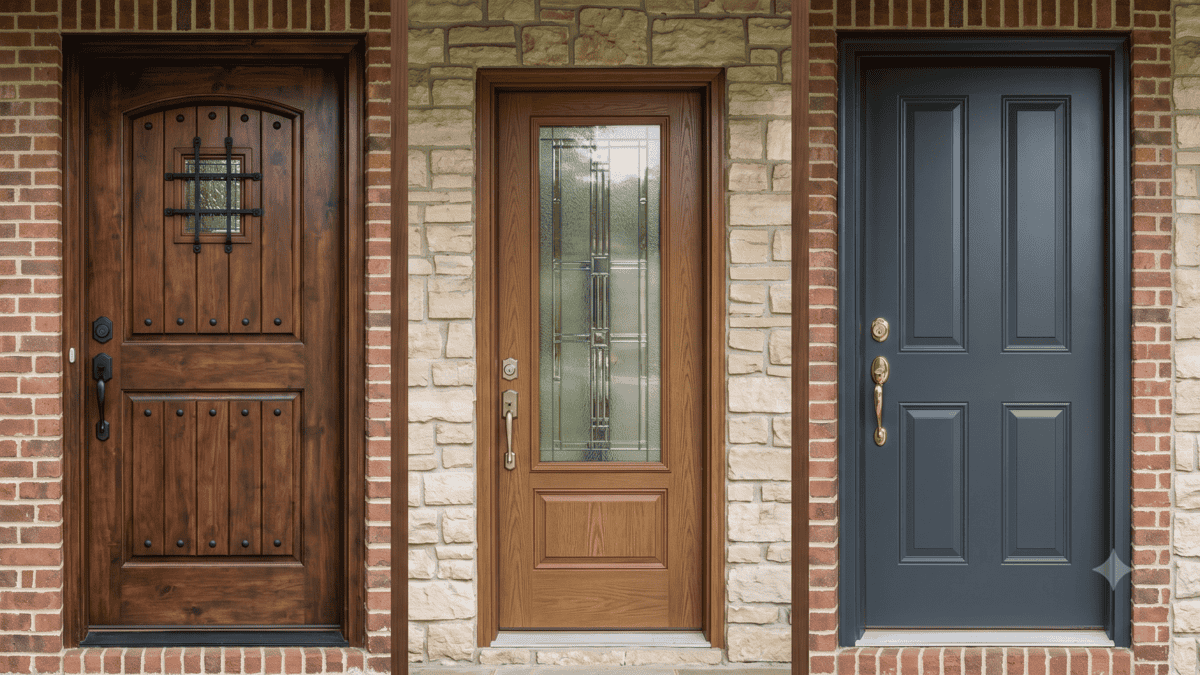
If you want a wood appearance but prefer lower upkeep, fiberglass is often the strongest candidate. Fiberglass doors can be hand-stained to replicate wood grain, and lines like ProVia’s fiberglass and steel entry doors pair convincing faux-grain textures with real durability.
Why Homeowners Choose Fiberglass
Fiberglass works especially well for homeowners who want a stained appearance but don’t want to refinish the door periodically.
- Realistic wood-look options
- Lower maintenance than natural wood
- Resistant to dents and rust
- Strong insulation cores
While customizable, fiberglass does have design limitations compared to fully custom wood doors.
Steel Front Doors: Clean, Strong, and Paint-Ready
Steel doors are typically used when the goal is a painted finish. They provide a smooth surface that works well with bold or modern color choices. These doors are not designed to replicate natural wood grain. Instead, they deliver a clean, consistent look.
Why Homeowners Choose Steel
Steel is frequently selected for modern homes or when homeowners want a clean, minimalistic aesthetic.
- Painted finishes (black, charcoal, bold colors)
- Simple, modern designs with strong, durable construction
- Straightforward performance needs
Steel is cost-effective, but design flexibility is limited, and it cannot deliver a convincing wood-grain look.
Wood Front Doors: Maximum Customization
Wood doors offer the highest level of customization. If a home has a unique entryway or requires specific dimensions, wood is often the only material that can meet those requirements.
Why Homeowners Choose Wood
They can be custom-built to match the opening exactly, which is why TruStile custom wood doors are often used in distinctive or architectural designs.
- True wood grain appearance
- Fully customizable
- Ideal for historic or distinctive homes
Wood is often selected when architectural authenticity or one-of-a-kind design is the priority. They do cost more, require regular refinishing, and are more sensitive to weather exposure.
When Each Option Makes the Most Sense
Choosing the right material becomes much simpler when you match it to your goal instead of comparing features in isolation.
- If you want a wood look with less maintenance, fiberglass is usually the right fit
- If you want a bold painted finish, steel is often the better option
- If you need a custom size or unique design, wood is typically required
Fiberglass and steel doors typically include insulated cores that support thermal performance. On the other hand, wood doors offer natural insulating properties but do not rely on synthetic core insulation.
This is the exact process we walk homeowners through. Start with the look, review available options, and then choose the material that supports that outcome. That approach prevents mismatches between expectations and final results.
Cost, Maintenance, and Longevity Considerations
Each material comes with trade-offs that affect long-term ownership. The key is aligning the material with both climate conditions and homeowner expectations.
- Steel: Lower upfront cost, limited design flexibility. The trade-off is a smooth painted surface that holds color well, but cannot fake wood grain.
- Fiberglass: Moderate cost, lower maintenance, insulated cores, and dent resistance make it the middle option that asks the least of you over time.
- Wood: Higher cost, highest customization, more upkeep, though construction type varies significantly and affects how much maintenance a wood door actually needs.
Longevity depends less on the material alone and more on installation quality, exposure to weather, and maintenance habits. Regardless of material, professional installation is critical. Even the best door will underperform if not properly sealed and installed.
Why Installation Matters in Kansas City
A door is only as good as its installation, and Kansas City tests that harder than most markets. Temperature swings, summer humidity, and seasonal moisture all work on the seal, the frame, and the fit. A door that is not sealed and shimmed correctly will show it here within a season or two, in drafts, in sticking, in a finish that fails early. That is why our installers hold InstallationMasters certification, the industry standard for proper fenestration installation.
It’s also important to take note that Kansas City weather introduces temperature swings, humidity, and seasonal exposure that all impact door performance. For added protection against that exposure, a storm door can extend the life of the entry door behind it. So if you’re considering upgrading your entryway in Kansas City, Windura can help you evaluate options and choose a door that enhances curb appeal, performance, and long-term value.
Choose the Right Entry Door With Confidence
Choosing the right front door starts with clarity, understanding the look you want, the level of customization you need, and how each material performs over time. Our team works with homeowners across Kansas City to compare fiberglass, steel, and wood options in a way that makes the decision straightforward and practical.
Contact Windura today to schedule your consultation and get expert guidance on selecting and installing a front door that fits your home, your style, and your long-term expectations.